

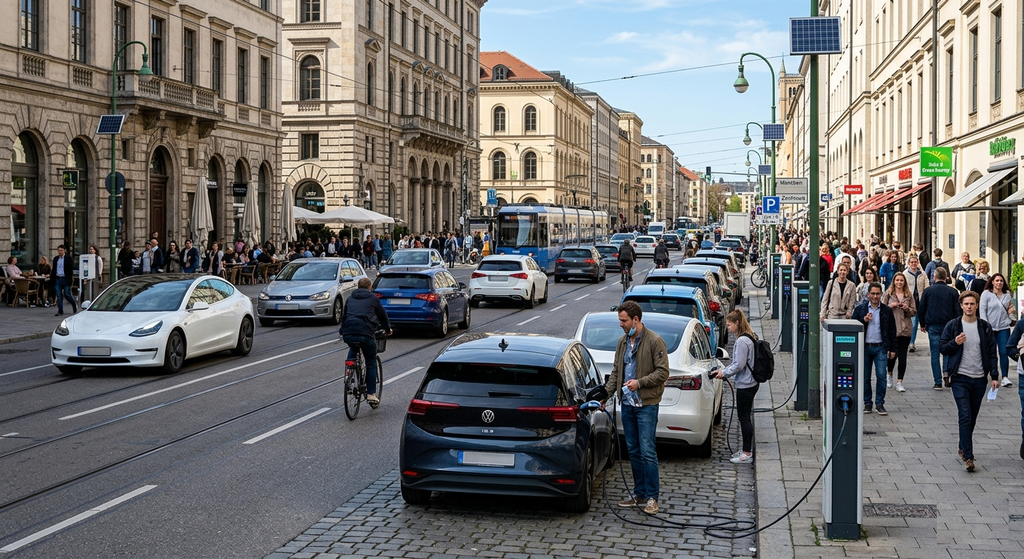
Global Electric Vehicle Sales
The global electric vehicle market continues to gain momentum in 2026 as consumers increasingly choose battery-powered transportation over traditional petrol and diesel vehicles.
Several countries are experiencing strong growth in EV adoption due to lower operating costs, rising fuel prices, and expanding charging infrastructure.
Industry analysts say electric vehicles are no longer considered futuristic products. Instead, they have become mainstream transportation choices for millions of drivers around the world.
Europe remains one of the strongest EV markets globally. New registrations of electric cars have increased significantly compared to previous years as governments continue supporting clean transportation initiatives.
Consumers are attracted by several advantages.
These include:
- Lower running costs
- Reduced maintenance expenses
- Government incentives
- Improved driving range
- Better battery technology
Manufacturers have also dramatically expanded their product offerings.
Five years ago, buyers had limited options.
Today, consumers can choose from:
- Affordable city cars
- Family SUVs
- Luxury sedans
- Pickup trucks
- Electric vans
Battery technology has become one of the biggest reasons behind this growth.
Modern EV batteries now offer ranges between 450 km and 700 km on a single charge. Fast-charging systems have also improved substantially.
Many newer EVs can recharge from 20% to 80% within 20 to 30 minutes.
This improvement is helping reduce one of the biggest concerns among buyers: range anxiety.
Experts believe charging infrastructure expansion is equally important.
Thousands of new charging stations are being installed every month across Europe, Asia, and North America.
Private companies and governments are investing billions of dollars to ensure EV owners have easy access to charging facilities.
China remains the world’s largest electric vehicle market.
Chinese manufacturers such as BYD continue expanding internationally.
Their success comes from aggressive pricing strategies and advanced battery technologies.
Several Western automakers are now facing stronger competition from Chinese brands.
Tesla also remains a major player globally.
However, the market is becoming more competitive every year.
Consumers now have many alternatives available across different price segments.
Industry experts say competition will ultimately benefit buyers.
Better competition usually leads to:
- Lower prices
- More features
- Better battery performance
- Faster innovation
Oil prices are another factor influencing EV growth.
Many drivers are switching because electricity is significantly cheaper than petrol.
For households driving long distances every month, savings can become substantial.
Governments are also introducing stricter emission regulations.
Many countries have announced plans to gradually phase out petrol and diesel vehicles over the next decade.
These policies encourage automakers to accelerate their EV investments.
The future outlook remains positive.
Experts expect EV adoption to continue growing throughout 2026 and beyond.
Electric mobility is no longer an experiment.
It is becoming the new normal for transportation worldwide.